Notes on The Stalemate, 2025
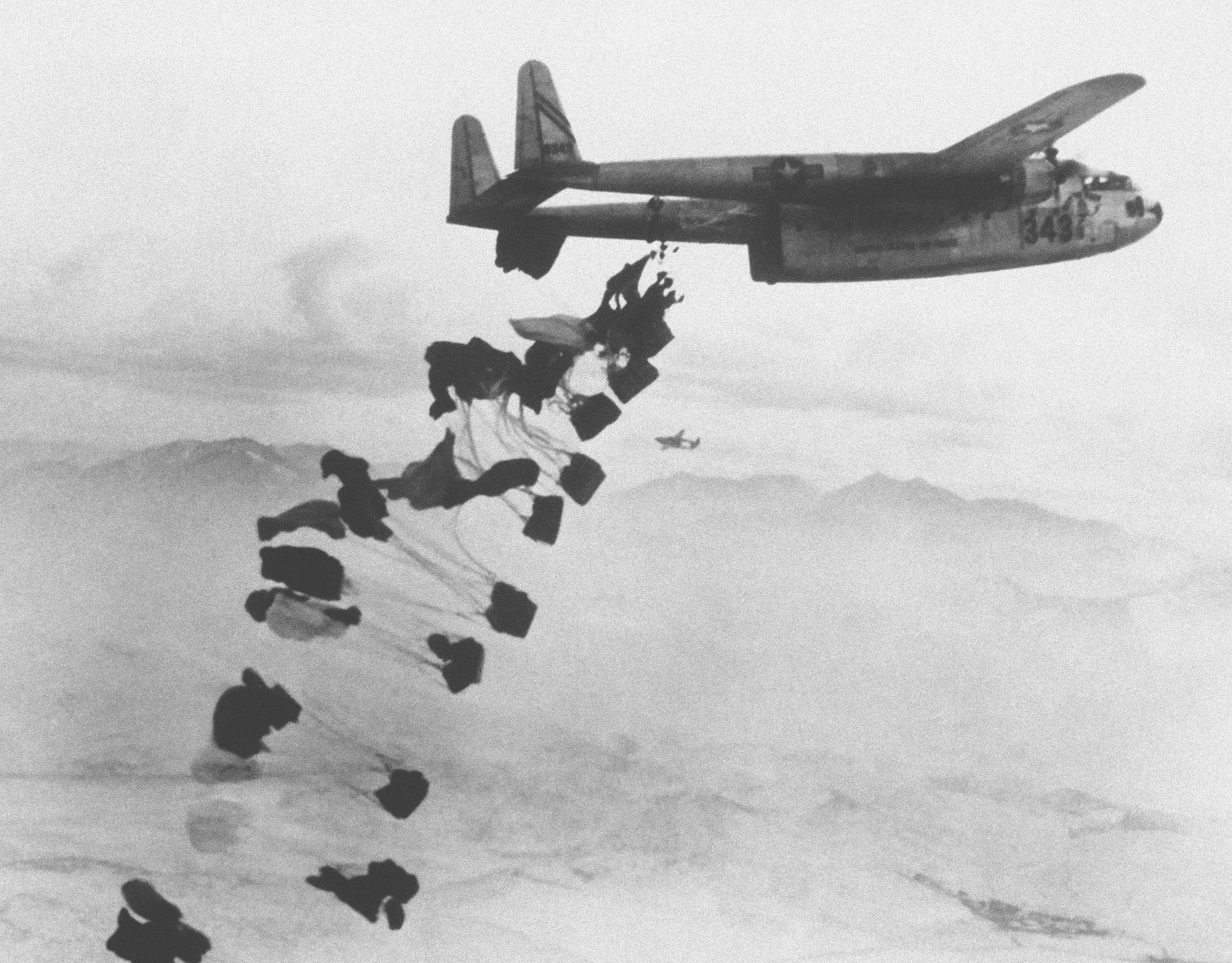
'The End and the Beginning of the World' is how Minouk Lim, a South Korean artist, describes the Korean peninsula and its two states of beings in her book United Paradox (2017). Under sharply contrasting sociopolitical settings, the two Koreans live in a completely different world. But how come the same ethnic group with a shared history and language can point guns at each other for over 76 years by 2025? The Stalemate (2025) revisits history through vernacular photographs and archival materials in an attempt to reimagine the past, present and future of the land of endless possibilities yet no probabilities.
The Korean War (1950—53), which caused the ongoing severance of Korea, was not solely about its people and their two different ideologies but had more to do with the power struggle between two hegemonic states—namely the US and the Soviet Union—which takes over the South and North respectively in the result of the atrocity, at the beginning of the Cold War. To ease the tension between the Blue and Red blocs and for the sake of greater peace in the world, the arbitrary line that separates Koreans into two—the 38th parallel—has to be drawn against the people's will. Koreans had to witness them playing chess in their motherland, a game of chess that has no winner, resulting in a draw: The Stalemate.
In close history, the place seldom belonged to its people. Before the Korean War, at the height of Japanese imperialism and colonialism, the people were forced to change their names to Japanese and learn the Japanese language as an official one, while the Korean language and Hangul were banned in schools. Perhaps this type of recurring erasure and loss of sovereignty, culture and selves remain as afterimages in Koreans' collective memory, making both sides of Koreans eager to become self-contained so that no such catastrophe can ever occur in their respective territories. They have been running towards opposite directions at maximum velocity in denial of the tragic past. But looking back, the distance between the two had grown as much as the very velocity.
Yanagi Sōetsu (1889—1961), a Japanese philosopher and art critic who observed the immorality of the Japanese rule during its imperial period, describes Korean aesthetics as 'the beauty of sorrow' in reflection of its consecutive colonial history. It is not a noble form, vivid colours or decorative elements that require resources but pure lines that were most suitable to express such emotion of loss, he explains; the lines of endless ridges and rivers across the peninsula; the lines of white porcelain, also known as Moon Jar. And there is the colour white, the symbolisation of the abnegation of desires, suppression of emotions, spiritual purity and bright light. The Stalemate reifies the beauty of sorrow through its design and material choices to evoke sensibility and tactility while elevating forgotten history through rescued images. From the voices of the photos, I hear void, resentment and condemnation—not only in the landscape where bombs and artilleries were trampling through but in the people's faces. The book acutely remembers the cruelty of war and imperialism but at the same time focuses on ordinary people's everyday lives, aware that behind every domestic armed conflict or international war, there are sacrifices of human beings.
'The enemy is met on the single log bridge' is a widely known proverb in Korea that captures the paradox of being confronted while coming from and heading towards opposite directions by two on a narrow and unstable log bridge; it implies a fatalistic death of one who has to be fall off so the other can cross. But there needs to be no one erased from history again. There would be ways that allow both to cross the bridge once the conversation has been generated. Perhaps the two might decide to cross it towards the same direction or not to cross the bridge at all forever.
The project is my response to the OSPAAAL Collection at V&A, which stands for the Organisation of Solidarity with the People of Asia, Africa and Latin America, where I found North Korea posters made in the 1960s with not too different propaganda from today. This means that Koreans have been stuck in the same old labyrinth of politics since then. I hope this work resonates with more third voices that envision alternative narratives, transcending political norms and geographical restrictions.