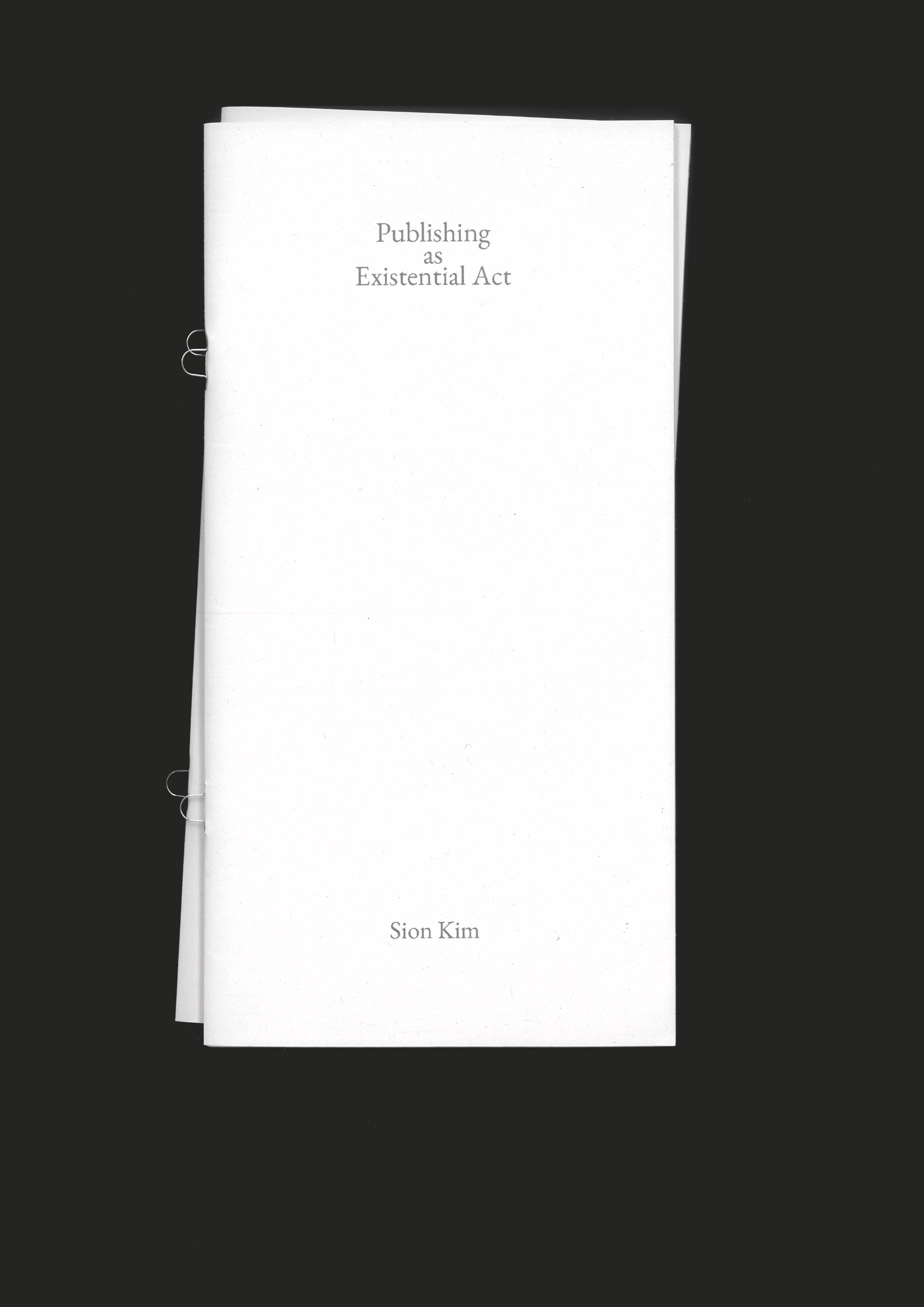
Publishing as Existential Act, 2025
To all the young intrepids
who set out with big dreams
but never made it home
who set out with big dreams
but never made it home
1)
Introduction
Bureau for Transients is a perpetually nomadic, loosely joined collective where individuals discuss, visualise and reimagine their existential angst caused by all types of migration. The community is translucent, unset and fluid to foster true inclusiveness with no barrier. It refuses representation of an already existing community; rather, it attempts to redefine the meaning of community, collectiveness and belonging. The collective’s practice subverts the notion that the individual is subordinated to the community, a motivation reinforced by Sartre’s existentialism and inter-subjectivity, which will be discussed in depth later in this writing.
The collective’s first open-ended publication series—Anthology for Beings—explores alternative visual languages and different formats. The project was set up by synthesising various sociopolitical and philosophical ideas—from A Theory of Migration (Lee, 1966) to Existentialism and Humanism (Sartre, 1948). Then, to shape those abstract and theoretical discoveries into physical and empirical design outcomes, Lines (Ingold, 2007), The New Art of Making Books (Carrión, 1975) and Paratexts (Genette, 1987) are intertwined, informing different design decisions throughout the project’s development. Considering the thematic nature of this writing, which will speak to the importance of decision-making with an existential will, the Project Evaluation section adopts a format that describes the core idea development or use of a specific medium and layout, then elaborates the whys in detail.
2)
Contextual Review
2.1)
Migration
About 70,000 years ago, homo sapiens first embarked on their journey out of Africa. Since then, human beings have been constantly migrating in history to overcome various turmoils, such as climate challenges or territorial disputes between tribes. Given the species’ vast history, it is a relatively new phenomenon that they began to validate their movements by controlling borders and examining nationalities. In fact, the current notion of nation is a distinctly modern political ideology that started its formation at the end of the 18th century; political scientist and historian Benedict Anderson (1983) describes this newly discovered point of view as Imagined Communities in his book. This means that before a systematic education process conceptualised the ‘nation’ and made it the basis of primary identity formation, humanity was as free as birds who migrate, not letting authorities legitimise their identity.
Today, humans are facing karma of their own Invented Tradition (Hobsbawm and Ranger, 1992)—in other words, a nationality. Menacing efforts from nationalists are omnipresent across the world, from groups of people who want to ‘stop the boats’ to those who want to make some particular sovereign states ‘white’ or ‘great again’. Nevertheless, the goodwill of mass public seems to surpass those groups’ transnational sabotage. Although its extent might not be satisfying, a study shows that social reception and awareness for people seeking semipermanent residence in foreign destinations—such as refugees or asylum seekers—has improved over the past decades. (Pew Research Center, 2019) However, perhaps because of the inseparability between migration and politics, humankind has repeatedly failed to see newcomers with apolitical or personal relocation factors. Those transient existences—such as seasonal workers, digital nomads or international students—still exist in society but are seldom visible because of predetermined life expectancies engraved on their Identity Documents.
Individual’s migration experience is deeply distinctive yet universal; sociologist and demographer Everett S. Lee (1966) analysed human beings’ migration patterns, conceptualised and formulated it into a diagram (Fig. 4) in A Theory of Migration. Whether the characteristics of resettlement are political or personal, occurred in primitive culture or modern society, there are always push and pull factors at the origin and destination with intervening obstacles. Although essential repellent and attractive influences exist—hence, universal—the individuals’ criteria for these vary greatly and are therefore ever-subjective, meaning that this complex phenomenon of self-determining life decisions can not be generalised, standardised or categorised by mass—either from mass public or mass media. This parallels the author’s emphasis that the decision to migrate can never be entirely rational—but somewhat irrational—and therefore to avoid generalisation. (Lee, 1966, p. 51) By proactively evaluating their affiliated surroundings and possibilities for a better life and overcoming both internal and external hurdles, mankind has realised their ego. This arguably romanticisable human nature is, in fact, close to a perennial war between the desire for connectedness versus the pursuit of autonomy—an invisible coup by the individualist self (of destination) over the collectivist self (of origin). It requires total inner reconstruction; once the work is done, they say, home doesn’t feel like home anymore.
2.2)
Isolation
Isolation seems inescapable regardless of the voluntariness of one’s migration. The emergence of this self-permeating emotion transcends geographical closeness or cultural homogeneity between origin and destination. British writer Olivia Laing (2016) investigates the outsider’s loneliness in depth while recalling her experience as an alien in the US in her essay The Lonely City. Even though the UK and US share the language, a mere artefact of foreignness—in her case, the accent—realised and evoked a sense of ‘otherness’. This kind of othering is different from blatantly cruel racism or nationalism, but it tacitly occurs in the most ordinary days and comes without warning as if it is a misfortune; for instance, a parade of changing names when baristas call them out to pick up their coffees. As these seemingly trivial series of events accumulate, a growing silence (Laing, 2016, p. 32) overtakes the settlers’ mentality, which in turn creates a vicious circle that makes them doubt the capacity of language that bridges the gap between bodies, makes them less likely to speak out and express themselves, which eventually makes them even more invisible in the society. Perhaps the peripheries might need alternative languages that are not necessarily verbal or aural but visual and tactile.
Loneliness, which makes up or derives from such isolation, is a complex organic emotion that can hardly be defined by words. Perpetually laden with shame, it is often subject to pathologisation. (Laing, 2016) It would be safe to say that the current prosperity of mankind is a reward for their ability to connect with each other, make groups, collectively hunt and cultivate, build town and live amid a crowd—unlike any other animals. Whilst this nature of such social creatures is long-time valued, on the contrary, the paucity of social links is considered a weakness, somewhat undesirable or even pathetic. From the era when they used to collectively hunt mammoths to today, where they virtually send likes to connect to each other, human beings long for social connection by nature; the allergic reaction towards loneliness is perhaps a collective memory engraved in their genes. The negation and hyper-demonisation of this natural human emotion have been prevalent throughout history; sociologist Robert S. Weiss (1973) describes the feeling as a ‘chronic and perpetual disease without redeeming features’ in his book.
2.3)
Existentialism
Despite the above adversities, including loss of familiar community and self, emergence of isolation and loneliness, humans still find the unknown world attractive and choose to leave their homes against inertia. This obscure behaviour of mankind can be further investigated and understood through the lens of French philosopher Jean-Paul Sartre. In his book Existentialism and Humanism (1948), which initially was a lecture by himself a year before its publication, Sartre discusses the gravity of self-initiated life decisions that inform human beings to find their essence. Historically, until very recently and even still in some areas of the globe, the fate of a human is already determined as they are born; in this case, a human’s essence—the meaning of themselves in this world—precedes their existence guiding individuals to relatively socially passive, geographically caged ways of life. In his view, the decision to leave is the courage to defy the gravity that resides around and grounds us, to question complacency and is a lived practice that reflects a proactive attitude toward one’s own life. Whether it is domestic or cross-border, war-caused or career-wise, human beings decide to relocate themselves as a means of existential act—to find themselves by being lost.
As decision factors for one’s resettlement are ever-subjective, as discussed previously, so is Sartre’s existentialism; more precisely, he introduces the idea of inter-subjectivity in order to elaborate on his Existential Humanism. Albeit the individual’s subjective choice and action, the freedom followed by those were paramount in his doctrine, he still acknowledged the presence of Others. According to him, humans exist in a condition where their being is not solely subjective but at times transforms as an object once looked at or gazed at by Others: others who are also subjective for themselves (Sartre, 1992). Denoting that there is neither ultimate subjectivity in his theory nor as such objectivity; there is neither more significant I nor negligible Them. The etymological root of the word ‘exist’ also encapsulates Sartre’s point of view; it is derived from the Latin word existere, a combination of the words ex (out) and sistere (take a stand). From the era when one’s ‘existence’ was initially conceptualised and that being so the word was coined, it has always had something to do with the external world or society (out) where Others exist rather than solely about an individual oneself. Nonetheless, this is not to say that Sartre’s existentialism or himself was collective-friendly—considering the famous quote from his play No Exit, “Hell is other people.” (Sartre, 1944)
Instead, his idea of one’s existence constantly oscillating between subjectivity and objectivity suggests an alternative way of co-existence where there needs no shoes to be in, as individuals are fundamentally different. A human being is unable to escape their own body, and it is that very subjectivity that makes each man unique and the world diverse. He believes that there is no design—the universal essence—for human beings, unlike a cup or a pair of shoes. Humanity is the first kind of indefinable or nothing when thrown into the world—just like an empty paper waiting to be filled. Perhaps Sartre envisioned a society where individuals are freed from unuttered yet forceful ‘blend in’ or ‘fit in’ under the name of a community they long for. In his philosophy, subjective beings are self-contained yet loosely joined, prefixed with ‘inter-’ (among or between), not ‘co-’ (together).
3)
Project Evaluation
3.1)
Anthology for Beings (1/3)
Anthology for Beings (1/3) collects and publishes lines from ten different individuals who migrated either domestically or internationally, semipermanently or transitorily and happened to converge in London in 2024. The collaborators unearth their trajectories and sublimate them into two line drawings—one based on maps and one transcending boundaries. The polyphonic artefacts of different ways of existence are then transferred to plates for offset lithography, which is a slow printing method where images emerge while oil and water—the two counter-materialities—are being mingled against inertia. The tension and repellency between two opposite attributes of substances is the empirical embodiment of push and pull factors (Lee, 1966) and subjectivity and objectivity (Sartre, 1992). This idea of a ‘physical way of thinking’ or ‘thinking through materiality’ is fortified by artist William Kentridge, who discourses “The way in which the material you working with, can inform the actual thinking and understanding of the world around you.” (BBC Radio 4, 2015, 13:59) The time and physical labour imposed onto the printing process is the designer’s existential reflection that questions the complacency of the ‘ditto machine’. (McLuhan, 1967) From data collection to materialisation, the publication is handled at a slow pace and in a humane manner intentionally, aware of the current velocity of lives accelerated by digitalisation—“...to inspire the pursuit of more holistic ways of knowing oneself, encountering others, sharing knowledge, and evolving together toward harmonious and resilient forms of living.” (Pais and Strauss, 2016, p. 9)
3.1.1)
Lines
In her project, Bouchra Khalili experiments with how individuals’ different migration experiences and their fragility and amorphousness can be sublimated into works of art through the use of lines and the format of film documentation. To vividly capture the most raw, unaltered, first-person stories of her subjects—who she encountered in different transit hubs—the artist intentionally video records their trajectories and narrations in one long shot with no cuts. The decision for this can be viewed as her reflection of the ‘subjectivity’ of human migration. By deliberately refusing edits and abstain her own intervention as a project organiser during their self-narration, she chooses to become a messenger who listens, collects and amplifies the subjective voices, not an exploiter who uniforms or converts those into another form of (re)creation. With this consideration, her project enabled the invisibles’ voices to be heard as they speak and facilitated a platform where she and her collaborators collectively and artistically resist the singularisation of migrant identity demanded by the surveillance society, border patrols and the media. (MoMA, 2016) Here, the subjectivity becomes sovereignty.
Her project also demonstrates how a medium itself can contribute to conveying a message when the materiality is considered and chosen with intention. In her video, narrators imprint their presence through permanent markers against a cartographic map, a symbol of colonisation and imperialism. Lines drawn onto it with the indelible medium then become obscure yet artistic artefacts that represent not only their resilience on push factors at points but also their resistance to the arbitrary patchwork imposed by hegemonic nation-states. (Lisson Gallery, 2017) In the following consequential project, The Constellations Series (2011), the artist isolates lines from the maps, implying a complete removal of geopolitical restrictions. As the title suggests, this series of silkscreened lines visually and conceptually evokes astronomical constellations; it is a device to escalate the stateless’s existential will to a celestial space, the cosmos, by breaking away from the land where has been the spatial limit of the subject matter. At the same time, it is perhaps the artist’s wish to remind the viewers of how much the sense of belonging has been dependent on the constructed concept of nation and valid identity and to reimagine ‘belonging’ from a completely different premise by escaping the condemnable earth. (La Biennale di Venezia, 2024)
But why do lines matter, and how do they represent human lives, especially in the current subject matter of migration and existentialism? The correlation between human lives and lines is thoroughly explored by social anthropologist Timothy Ingold (2007) in his book Lines. According to him, whether consciously or not, human beings inevitably leave lines while or after walking, writing, singing, weaving—and migrating. It is a gesture that intrinsically entails movement from one point to another; it is an itinerary that is less about arbitrary drag (without will) but more to do with innumerable in-between points (and decisions) that bridge the two—thus, it is an existential artefact. This view of a line consisting of countless points goes back to ancient Greek philosophy and was first discussed by Zeno (circa 460s BCE) of Elea in his Paradoxes before its mathematical conceptualisation began to be formulated by Euclid of Alexandria and following scholars. If a line is a motional byproduct of human beings and their existence, as Ingold suggests, then, from Zeno’s perspective, the innumerable dots that make up a line could be viewed as human beings themselves in different locations. A line, in this regard, can only exist when a static dot (a human being) decides to move. A line can only exist when there are at least two points: a human being in two different locations. That is, without deviating from the comfort zone, one cannot realise a line—or the essence.
In a conversation with Timothy Ingold and distinguished artist William Kentridge, whose drawing also entails lines, Imtiaz Dharker, a poet and graphic designer who was invited to a forum hosted by the BBC, says: “The line for me, whether it’s the line of a drawing or a poem has always been about black on white, a mark on emptiness, presence on absence, the human voice on silence, footprints on snow…” (BBC Radio 4, 2015, 21:07) From the quote, her conceptual thinking on a line drawing manifests itself; a line imprints one’s existence (a mark, presence, human voice) on an erasing world (emptiness, absence, silence). In other words, it is a rebellious tool by nature that imposes extras to an omitting world, dos to an undoing world (additive) and scars to a perfect world (reductive). The objective of each stroke of lines as an artistic implication is, therefore, to defy generalisation or assimilation with its dynamism, unpredictability and fluidity. This is also parallel to irrationality (in Lee’s words) and subjectivity (in Sartre’s words). A line is free to go where it will, for movement’s sake. (Ingold, 2007, p. 73)
Khalili focused on the permanence of materiality and therefore chose a marker, but there are materials that are rather ephemeral and open to modification, such as pencil, graphite, charcoal, or conté. What these materials do onto surfaces (oftentimes, paper) is still an existential imprint but a different type of it—the more manipulation of erasure there is, the more traces inevitably they leave. These mediums may be temporary or transitory compared to a permanent marker, but they are by no means fragile; they resist harsher and louder when there is an attempt to erase their existence by leaving inky and smudge traces around them. The weight of lines as an abstract self-expression might be further deciphered when the surfaces—that lines are drawn onto—are questioned. If a point is a human being and a line is their ontological evidence, then what would a paper or a page that those are drawn onto be? Perhaps, rather surely, it would be the world in which they live.
3.2)
Anthology for Beings (2/3)
Anthology for Beings (2/3) explores the spatiality of each page, which consists of a medium-format photography book, experimenting with margins and blank space and how their intentional use can tacitly guide certain emotional impressions. Reflecting on their own migration experiences, participants excavated 14 objects that symbolise push and pull factors from origin and destination (Lee, 1966). The collected objects are then placed onto a white backdrop to be photographed in an analogue, with the exact same camera settings and lights; this is to realise complete and equal removal of any elements that might interrupt an individual’s original voice. Once freed from frames, images navigate the page—without any systematic grid or methodological layout—as if drifting in a gravity-free space. This is not only a visual device that implies the constantly oscillating psychology of migrants, between home and the unknown, between belonging and autonomy, but also a philosophical design decision that resonates with the hitherto discussed insights that ontological struggles cannot be singularised or systematised. The isolated objects organically communicate in the space—some are haphazardly paired, marginalised or centred, enlarged or shrunken—creating obscure yet lyrical rhythms without any detailed textual description being presented. In the absence of text, Paratexts (Genette, 1997)—in this case, the substantial white space and poetic, tactile materiality of paper and thread binding—become the main elements of the object, highlighting the voidness and personal and humanistic aspects of the project. By doing so, the publication brings peripheries to the centre.
3.2.1)
Space
There was a conceptual artist, also a trailblazer in Artist’s Book, who viewed a book—a collection of pages—as a space. In his essay The New Art of Making Books, Ulises Carrión (1975) gently dismantles canons of traditional bookmaking and manifests how he interprets and designs a book as an art, as a whole; that is, with clarity, differs from a medium that exists to publicise art or as a bag of words. (Romberger et al., 2021, p. 18) For him, each page—or space—was not merely a background where contents were being laid and waited to be read; rather, it was a metaphysical space with time and sequence where the margins and blank space actively communicate with contents to mediate between artist and reader. His deconstruction and reconceptualisation of spatial possibilities in the publication are much akin to or directly mirror the aspects of the real world where different elements, substances and beings organically communicate and influence each other, sometimes clashing, creating meanings—or essence—that is not firmly set but indefinable, enigmatic and ever-transforming. Pages then, under his point of view, become a little society where the typography, images, layout, and margins are inter-exist.
Artist’s book—or bookwork, as if artists make artwork—met its heyday in the 1960s, when conceptual artists such as Ulises Carrión himself, the prominent Dieter Roth and the all-rounder Yoko Ono explored this charming medium and made their ideas concrete. Since the avant-garde artists valued the idea itself over refining process and aesthetics, the medium’s tangibility as an object and its hassle-free accessibility must have been appealing enough to them, as it allowed them to ground and concretise floating abstractions while at the same time promoting them to a wider audience. In fact, the rise of book art is fundamentally rooted in the same knot of finding alternative ways of showcasing art against elitist venues such as galleries (V&A, n.d.). That is, publishing an abstract art book that primarily appeals to ideas and concepts is a peaceful yet subversive act that resists the current hierarchy of mainstream art and design scene where refinement culture is prevailing, and creatives are expected to present a work that ‘makes sense’. Carrion’s view on conceptual publishing as a rebellious communication tool manifests itself when he launches his own publishing and art curatorial platform in Amsterdam—Other Books and So—where he says that the “…other books, non books, anti books, pseudo books, quasi books, concrete books, visual books, conceptual books, structural books, project books, statement books, instruction books…” What this implies is endless possibilities and adaptability to changes that new books—especially those intentionally attempt to be enigmatic and problematic—inherent. Books are infinite, eternal spaces with protean characteristics as an art medium.
3.3)
Anthology for Beings (3/3)
Anthology for Beings (3/3) deconstructs and reframes words extracted from 24 participants’ textual discussion on a range of topics, including isolation and loneliness caused by resettlement, the transience of existence and uncertainty of the future, to experiment with the language’s ability as an instant mental image trigger. (Carrion, 1975) Words are regrouped and placed onto space based on the frequency of use, as it signifies those are the most shared emotions and thoughts amongst contributors. The words are typed exactly as many times as they are used, and this repetition, a slight obsessiveness, and a flux of words visually evoke the ontological anguish of the inter-authors. In this publication—or in the space or the world—human beings recite the same lyrical yet enigmatic verses together.
4)
Conclusion
Over time, human beings have collectively published their different ways of being—from ancient mythology to records of ordinary days—by imprinting those into various mediums and formats—from cave walls and clay tablets to A4 copier papers. Today, they are once again in a time of upheaval in mediums and formats, that is, from physical objects to virtual spaces and from publishing to posting; existences have become lighter in weight and pixelated in form. More and more beings who are thrust by the velocity of current society become acutely aware of the unbearable lightness of existence (Kundera, 1984). In such times, perhaps physical publishing means more than preserving tradition; it solidifies evaporative matters; it shelters the transients through its weight and tangibility as a real-life, humane object.
The collective’s practice commemorates human movement—the human who was brave enough to digress their comfort zone. At the same time, the project conceives the point as a static entity, the line as an ontological sign that appears when moved, and the page as a world that is drawn, envisioning the infinite possibilities of publishing as an alternative means or act of imprinting such existence. Collective publishing won’t be a panacea for all the existential crises humanity faces, but at least it can offer a rhizomatic platform where the peripheries’ voices can be heard and existences can be seen. The project is also aware of inter-beingness where individuals are apart yet together; as birds migrate, in this new collectiveness, collaborators are free to divert and converge, delay and alter the narratives—or continue alone. Here, the story takes a comma, but the line continues to be drawn, and the beings continue to migrate,
5)
Bibliography
- Adema, J. (2024). ‘Experimental Publishing as Collective Struggle. Providing Imaginaries for Posthumanist Knowledge Production’, Culture Machine, 23.
-
Anderson, B. (1983). Imagined Communities. London: Verso.
-
Borsuk, A. (2022). The New Art of Making Books. Available at: https://thereader.mitpress.mit.edu/the-new-art-of-making-books-on-bookworks/ (Accessed: 3 February 2025).
-
CU Boulder Libraries (2015). The Book’s Undoing: Dieter Roth’s Artist’s Books [YouTube video]. Available at: https://www.youtube.com/watch?v=_XVe5hd81IU (Accessed: 3 February 2025).
-
Dumm, T. (2008). Loneliness as a Way of Life. Cambridge: Harvard University Press.
-
Genette, G. (1997). Paratexts: Thresholds of Interpretation. Cambridge: Cambridge University Press.
-
Hellion, M. (ed.) (2003). Ulises Carrión: Personal Worlds or Cultural Strategies? Madrid: Turner.
-
Hobsbawm, E. and Ranger, T. (1992). The Invention of Tradition. Cambridge: Cambridge University Press.
-
Ingold, T. (2007). Lines: A Brief History. London: Routledge.
-
Kundera, M. (1984). The Unbearable Lightness of Being. London: Faber and Faber.
-
Kosuth, J. (1968). Four Titled Abstracts [Offset lithographs]. MoMA, New York.
-
La Biennale di Venezia (2024). Bouchra Khalili. Available at: https://www.labiennale.org/en/art/2024/nucleo-contemporaneo/bouchra-khalili (Accessed: 3 February 2025).
-
Laing, O. (2016). The Lonely City: Adventures in the Art of Being Alone. New York: Picador.
-
Langdon, J. (ed.) (2010). Book. Birmingham: Eastside Projects.
-
Lisson Gallery (2017). Bouchra Khalili. Available at: https://www.lissongallery.com/exhibitions/bouchra-khalili (Accessed: 3 February 2025).
-
MoMA (2016). Bouchra Khalili: The Mapping Journey Project. Available at: https://www.moma.org/calendar/exhibitions/1627 (Accessed: 3 February 2025).
-
McLuhan, M. (1967). The Medium is the Massage. London: Penguin.
-
Ono, Y. (1964). Grapefruit [Artist's book, offset printed]. MoMA, New York.
-
Pais, A. and Strauss, C. (eds.) (2016). Slow Reader: A Resource for Design Thinking and Practice. Amsterdam: Valiz.
-
Pew Research Center (2019). Around the World, More Say Immigrants Are a Strength Than a Burden. Available at: https://www.pewresearch.org/global-migration-and-demography/2019/03/14/around-the-world-more-say-immigrants-are-a-strength-than-a-burden/ (Accessed: 3 February 2025).
-
Romberger, K. et al. (2021). Publishing as Practice. Los Angeles: Inventory Press.
-
Sartre, J. (1948). Existentialism and Humanism. London: Methuen.
-
Sartre, J. (1992). Being and Nothingness. New York: Washington Square Press.
-
Svendsen, L. (2017). A Philosophy of Loneliness. London: Reaktion Books.
-
The Forum (2015). BBC Radio 4, 3 January. Available at: https://www.bbc.co.uk/sounds/play/b04xn1td (Accessed: 3 February 2025).
- V&A (n.d.). Book as Idea. Available at: https://www.vam.ac.uk/articles/book-as-idea?srsltid=AfmBOoqCS5sRuH9PnNyOIP6Bjom3Db3i5v36XC-YR2odcWd_Tl_vQXjT (Accessed: 3 February 2025).